
Feral Deer Exclusion Fencing
Protecting Australian Farms and Native Habitats from Feral Deer.
A well-designed, constructed and maintained feral deer exclusion fence provides an effective first line of defence against invasive deer species.

Ready to protect your property with a proven feral deer exclusion solution? Our team can help design the right fence for your terrain and livestock.

Wild deer – including fallow, rusa, red, sambar and chital – are an expanding pest species across many parts of Australia.
Their impacts include grazing competition, crop and fencing damage, and livestock injuries or disease transmission.
In natural landscapes, feral deer cause significant harm to biodiversity – grazing out native ground cover, ringbarking trees, and accelerating erosion.
A well-designed, constructed and maintained feral deer exclusion fence is an effective solution for protecting agricultural land, livestock and conservation areas from these impacts.
A typical, cost-effective deer exclusion fence is built above 1500 mm to discourage jumping and is electrified to prevent deer from pushing through.
When planning your system, consider whether maintaining movement for native species is important on your property.
Fencing is Key
A Westonfence™ plain wire system – with every second wire electrified – has been successfully used by many producers to exclude feral deer.
Key benefits include:
-
Lower cost compared to heavy mesh or netting systems.
-
Easier installation in steep or vegetated terrain where lines follow uneven ground.
-
Reduced risk of total fence failure during flooding events.
This proven design delivers a durable, flexible and low-maintenance barrier against deer pressure, while maintaining long-term reliability and ease of access.
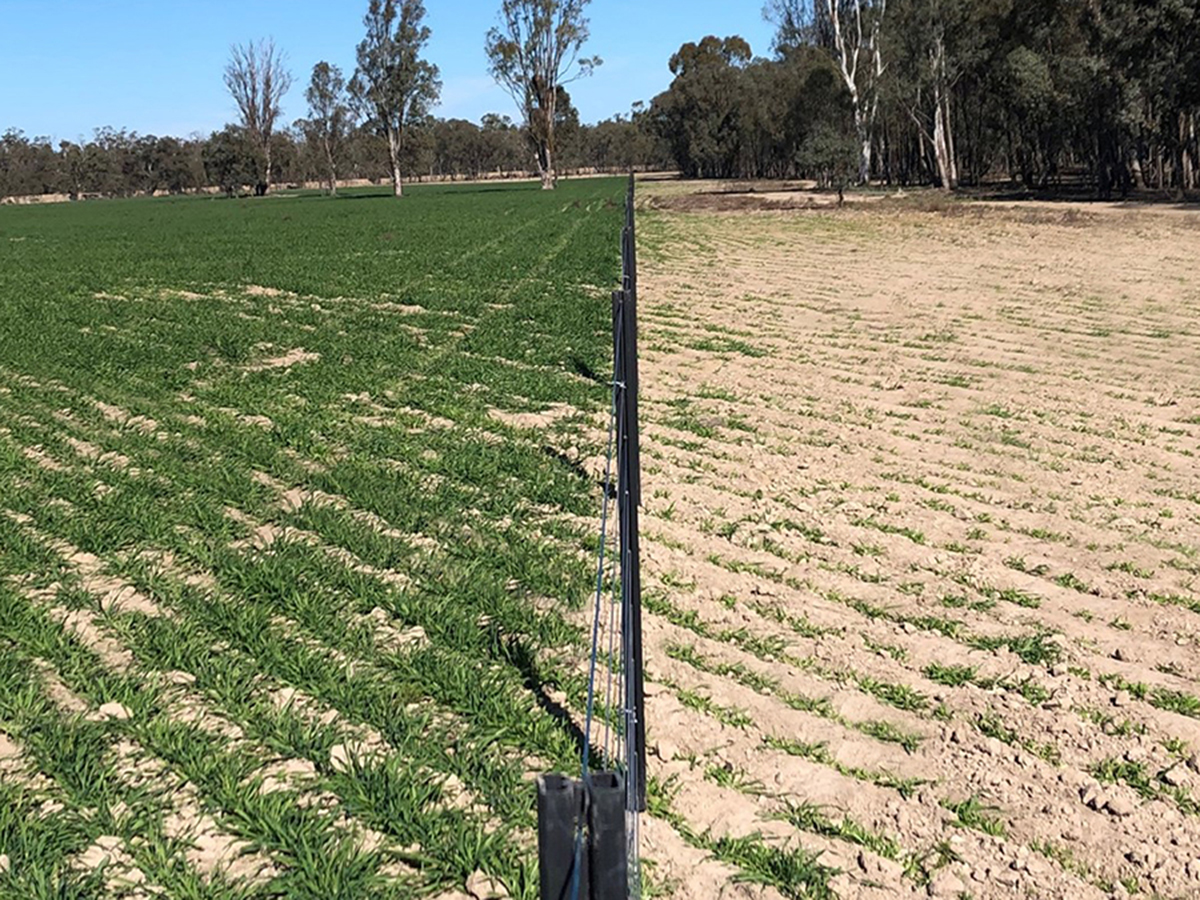
Securing the Perimeter
The Westonfence™ range of exclusion fences has evolved through decades of hands-on field experience and animal behaviour research.
One highly effective configuration for feral deer uses the Westonfence™ Exclusion Post, 1650 mm in height – tall enough to deter jumping, yet efficient to install.

Westonfence™ D10 = 10 Wire: 4 x Live + 6 x Earth
While deer can jump high, they are reluctant to attempt fences they cannot clearly see over or through – especially when the fence carries a live electric deterrent.
Each Westonfence™ Dropper features closer wire spacing at ground level – preventing deer from testing or pushing through.
Every second wire is electrified to create a strong, safe psychological and physical barrier.
Recommended configuration:
-
Steel posts at 10 m intervals
-
Droppers spaced at 3.3 m
-
Westonfence™ D10 design: 10 wires (4 × Live + 6 × Earth)
Maintenance tip:
Regularly check voltage, post tension, and clear vegetation from the fence line to ensure peak performance.
Thanks to Westonfence’s patented design, maintenance is minimal compared to conventional fencing systems.
Maintenance tip:
Regularly check voltage, post tension, and clear vegetation from the fence line to ensure peak performance.
Thanks to Westonfence’s patented design, maintenance is minimal compared to conventional fencing systems.
Adaptable Solutions
Westonfence™ offers a range of customisable deer exclusion options, adaptable to your enterprise size, terrain and target species – from mixed-grazing operations to large-scale conservation fencing.
Our team can help design the right layout for your property, balancing protection, sustainability and animal welfare.

Deer exclusion fence in Bunyip State Park
Prior to the exclusion fence the deer were using the fern gully as a highway to travel from the Bunyip State Park to grass pastures. There was massive trampling of the ferns and mosses and the epiphytic orchids were being knocked from the shrubs. I feel that the fern gully is recovering quite well.